

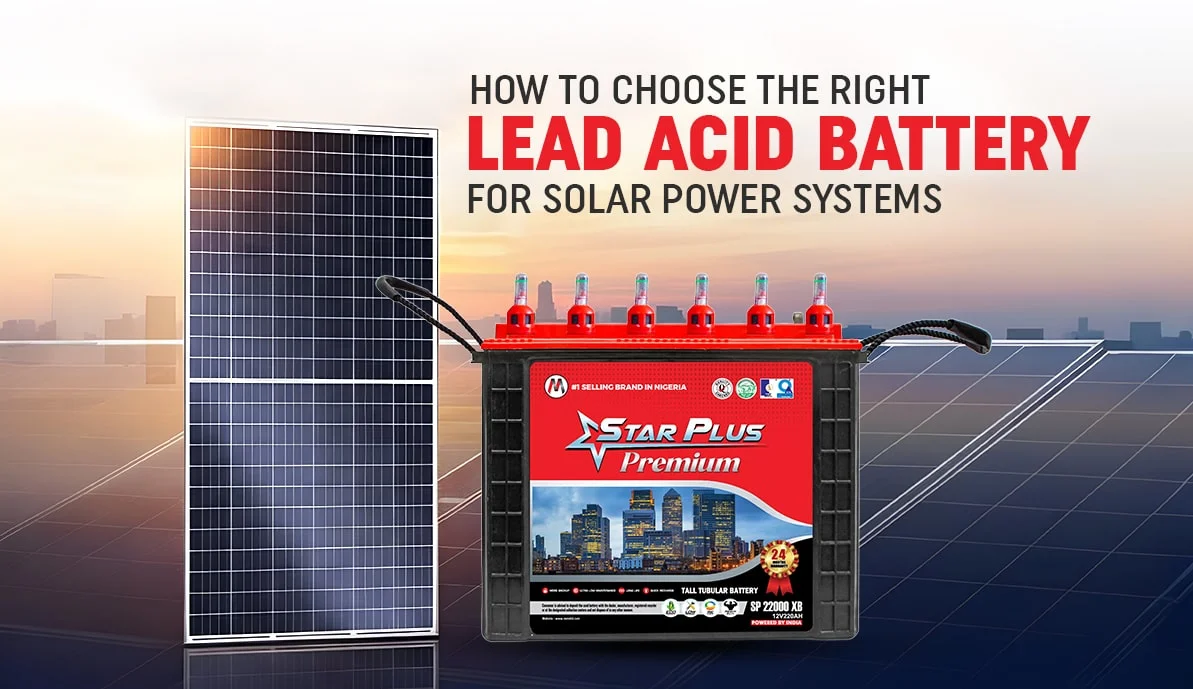
With frequent power outages and rising electricity costs, homeowners in Nigeria are increasingly turning to solar energy as a reliable alternative to traditional sources. Choosing the correct solar battery is critical to ensure an uninterrupted power supply, efficiency, and long-term savings.
At Star Plus Battery, we specialise in high-quality energy storage solutions designed to meet the diverse needs of homes. If you are looking to buy a solar battery in Nigeria, understanding the key selection factors is essential for a seamless solar experience.
What are the types of lead-acid batteries?
Generally, the two main types of lead-acid batteries are suitable for pairing with solar power systems. Here’s how a typical lead-acid battery can be classified:
1. Flooded (Wet Cell)
Such batteries are the most economical liquid-electrolyte batteries, which the user may need to top up with distilled water.
2. Sealed (Valve Regulated Lead Acid)
Such lead-acid batteries are spill-proof and considered maintenance-free because they don’t require water addition. However, the cost can be comparatively higher.
How to choose the right lead-acid battery?
When you opt to buy a lead-acid battery for your solar power system, there are certain factors to consider. Here’s how to select the correct inverter battery:
Understand Your Power Needs
First, determine your energy needs. List the appliances you want to power. Check their power ratings in watts. Add up the total load. This helps you determine the capacity of the solar inverter you need, in case you are looking for a replacement. A basic setup can power lights, fans, and a TV. For bigger homes or businesses, you’ll need more power. Consider fridges, air conditioners, and pumps.
Choose the Right Inverter Battery Capacity
The capacity of an inverter battery is measured in Ampere-hours (Ah). Higher capacity handles more appliances. For Nigerian homes, 220ah may be enough. In some cases, a higher rating is recommended. For a small setup, 200Ah batteries are a great start. Larger systems may need multiple batteries.
Match the battery capacity to your inverter size and power needs. Don’t mix old and new batteries. As your affordable lead-acid battery dealers in Lagos, we suggest you always choose a slightly higher capacity than your total load. This ensures efficiency and longevity.
Know about Battery’s Depth of Discharge and Round-Trip Efficiency
Depth of Discharge (DoD) is the percentage of the battery’s capacity you can use before needing to recharge. Higher DoD means you can use more of the stored energy and extend the battery’s lifespan.
Round-Trip Efficiency determines how much energy you can get back compared to how much you put in. A higher efficiency means that less energy is wasted and that your lead-acid battery can sustainably use your solar energy.
Match your battery with your solar inverter
When purchasing a battery, ensure it matches your solar inverter’s type and technology. Identify the charge and discharge cycles of your inverter. Make sure your inverter battery’s voltage is 12V, which matches the 12V voltage of your solar inverter.
Batteries store the power your inverter supplies. A good lead-acid battery is essential for achieving long battery life and optimal performance.
Star Plus Battery is a trusted name in Nigeria. Our llare not only durable and reliable, but they also perform well in local conditions. Each of our tubular inverter batteries is designed for the Nigerian power situation. So that they last longer and require less maintenance.
Where to buy reliable lead-acid batteries near me in Nigeria?
Where can you buy reliable batteries? Star Plus Battery is available across different regions of Nigeria. From Lagos to Ogun, Kaduna to Onitsha, our tubular batteries are accessible to consumers across Nigeria. You can place your battery requirements on our website, and our experts will connect with you.
Consumers often enquire about lead-acid battery warranty and after-sales services in Nigeria. Connect with our experts for a detailed analysis of your battery’s health, the issues it is facing, the maintenance it needs, its current warranty period, and the need for replacement.
How many years does a lead-acid battery last?
A typical lead-acid battery’s lifespan ranges from 3 to 5 years, and if it is well-maintained, it may last up upto 7 years. Our lead-acid batteries have a lifespan of 4 to 5 years and can be used for high-load and multiple applications across homes, schools, offices, and business sectors.
At Star Plus Battery, we offer lead-acid battery maintenance services in Nigeria. In some cases, our consumers are unable to determine whether the battery needs servicing. Please note how your battery is functioning and report it to us.
Get in Touch with us and let us know the specific ways we can help you with battery servicing and replacement.
Lead-acid battery FAQs
Overcharge and short-circuit protection
Thermal protection to prevent overheating
Safety vents for controlled gas release
Strong, corrosion-resistant casing
Spark-proof terminals
Spill-proof design (AGM / Gel types)
Low gas emission for indoor use
CE / UL / ISO safety certifications
0 Comments