

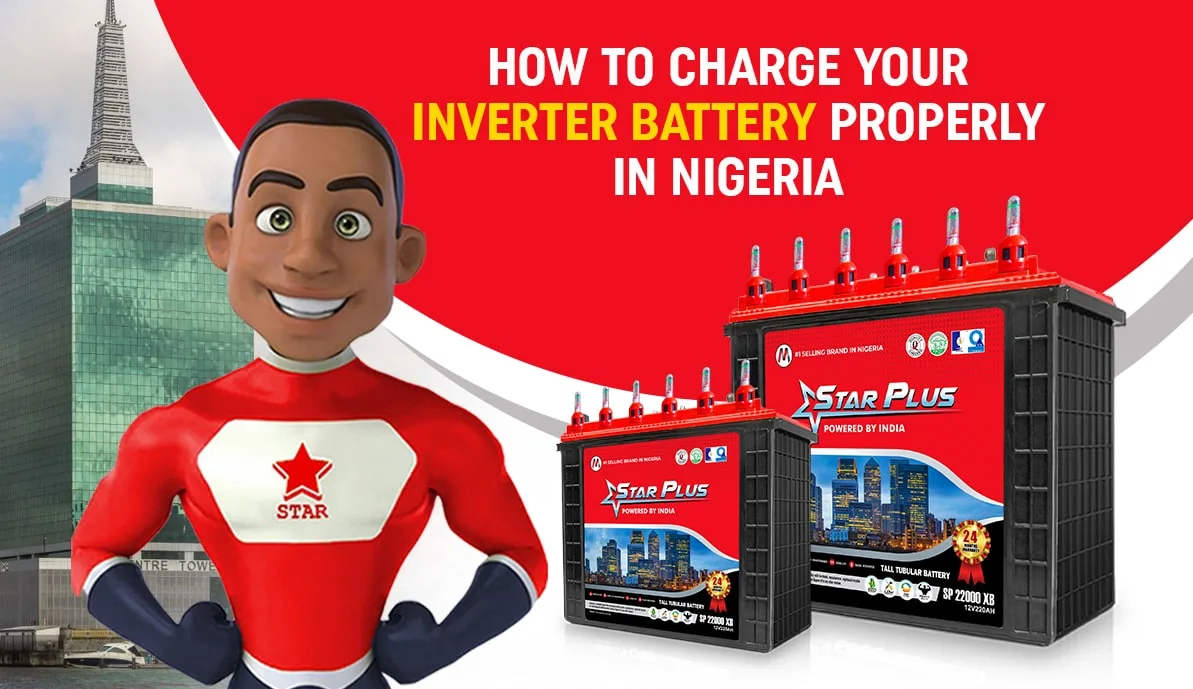
Inverter Battery Fully Charged! But is it? Charging your inverter battery properly is a crucial task. In many cases, a low charge imposes excessive pressure on inverter batteries, making them vulnerable to early damage. In other instances, overcharging damages battery terminals and reduces lifespan.
So, what’s the solution?
We can help you. At Star Plus Battery, we always aim to help you with the problems that you might face.
Check out this blog for a quick guide on how to charge your inverter battery properly. Whether it is overcharged or undercharged, let’s find out.
How do I charge my inverter battery in Nigeria?
Many of our users face a common problem. They are unable to decide the correct charging pattern for their tubular batteries. That’s why we have presented some easy inverter battery charging tips in Nigeria. Here’s how you can easily charge your battery:
1. Ventilate the Area
Place your battery in a well-ventilated area where air can circulate freely. This will prevent any buildup of harmful gases.
2. Disconnect the Battery Loads
Disconnect the battery from an electrical load on the inverter.
3. Check Water Levels
Check the water levels present inside the battery cells. The Star Plus Tubular Battery features an electrolyte level indicator, allowing you to check the water levels in our batteries. If needed, you have to top it up with demineralised or distilled water.
4. Secure Connections
You have to connect the inverter battery’s positive terminals to the inverter’s positive terminals and the negative to the negative. Ensure that all connections are secure.
5. Set the Inverter
Adjust the charging settings of your inverter to match the battery type and inverter capacity. Set the charging current to approximately 10% of the battery’s capacity.
6. Monitor Charging
Keep an eye on the battery during charging. If it gets excessively hot or shows any signs of damage, then switch off the charger immediately.
7. Disconnect When Full
Once the battery is fully charged, disconnect the battery from the charging point. Excessive charging can cause the terminals to burn and damage the battery.
8. Regularly Check
Keep the battery clean and the vents clear. Ensure that the battery is functioning properly and if it needs replacement, connect with us.
9. Connect with Professional Experts
As producers and distributors of the best inverter battery in Nigeria 2025, we are always here to help you. Our experts will help you install, maintain, and care for your batteries.
Can NEPA charge inverter batteries fully?
Charging the inverter with NEPA might fully recharge the inverter batteries if the power supply is stable and the voltage is within safe limits. However, because NEPA supply in Nigeria is often irregular, users sometimes experience incomplete charging cycles. To maximise efficiency, use a voltage stabiliser and ensure that the inverter is set to the correct charging current.
Batteries should not be left in a deeply discharged state waiting for NEPA to arrive. With consistent availability, NEPA can fully charge batteries, but fluctuations and interruptions often hinder complete charging in practice.
How long does it take to charge a tubular battery in Nigeria?
The time to charge a tubular battery depends on its capacity, the inverter’s output, and the quality of NEPA power in Nigeria. On average, a 220 Ah tubular battery may take 8 to 12 hours with a steady supply. Since supply interruptions are common, applying inverter battery charging tips in Nigeria, such as partial charging and timely top-ups, helps prolong the lifespan.
When charging an inverter with NEPA, users must ensure proper load management to avoid slowing down the process. Heavy-duty batteries in Nigeria last longer with steady and complete charging cycles. In places with unstable supply, solar backup often becomes a more reliable way to ensure adequate charge.
Can solar panels charge inverter batteries better than NEPA?
Yes, in many cases, solar charging inverter batteries in suitable places only provide better results than relying on NEPA. Solar panels deliver consistent energy during daylight, especially in sunny parts of Nigeria where exposure is high. This method avoids the risks of irregular supply, voltage instability, and partially charged batteries.
With an efficient charge controller, solar systems maintain healthy charging cycles and prolong battery life compared to fluctuating grid power. While the initial setup cost is higher, solar energy ensures independence from unreliable power supplies. Therefore, in regions with frequent outages, solar panels are not only better but also more sustainable than NEPA.
Try our long-lasting battery for Nigerian homes. Whether your appliances are powered by solar panels or conventional energy, having a top-notch battery will be the best decision.
Final Thoughts
By following these steps and tips, you can ensure that your inverter battery operates optimally and lasts for an extended period. Make sure to keep your battery fully charged, avoid overcharging and undercharging, and constantly monitor its functioning.
Still having further doubts? Let us know in the comments below.
0 Comments