

Across Nigeria, estates and homeowners increasingly rely on power backup systems to maintain uninterrupted daily operations. However, in the rush to secure reliable electricity, many users often choose batteries without fully understanding long-term performance and practicality.
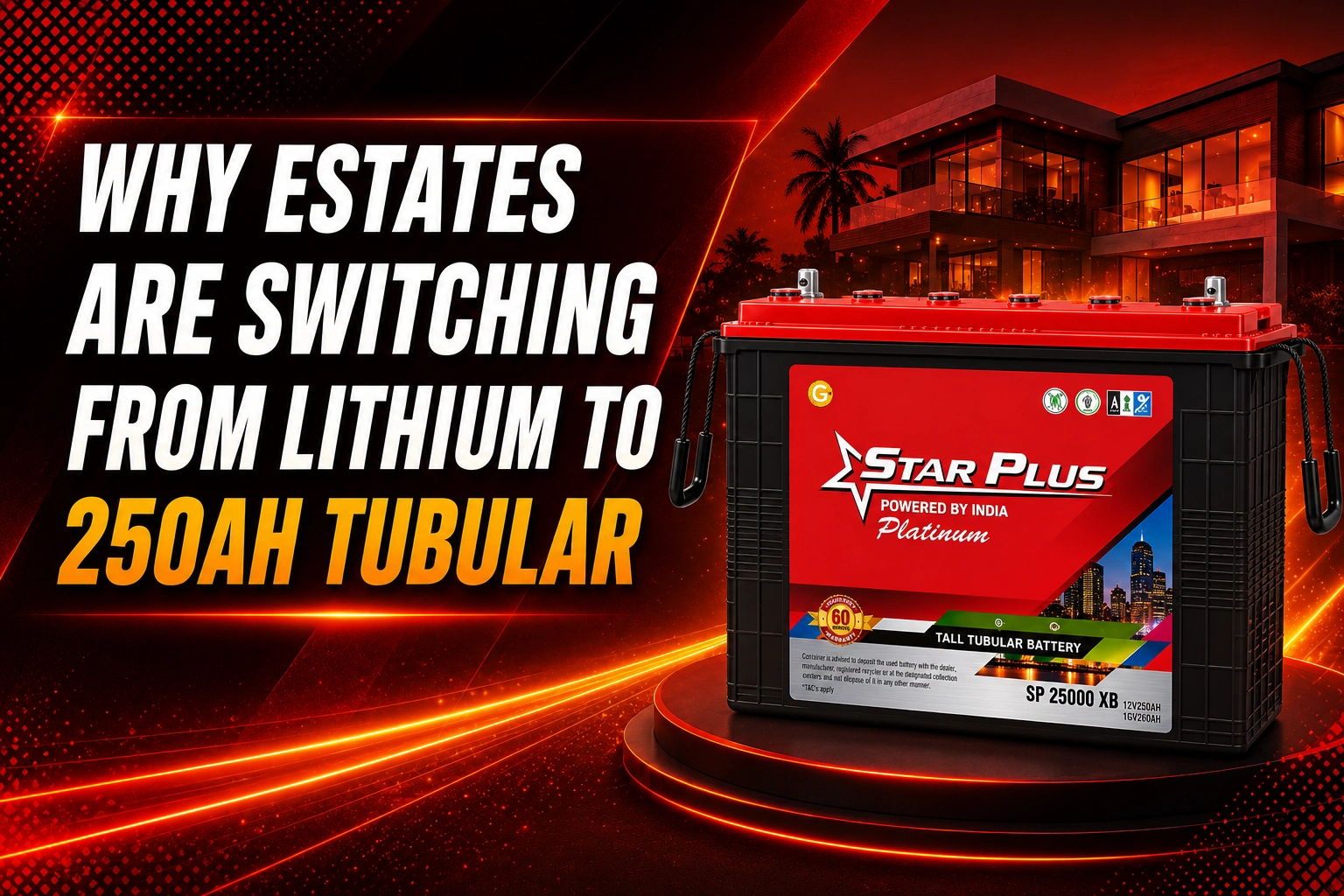
Today, Lithium-Ion and Tubular batteries are competing aggressively in the market. Yet, a growing number of estates are shifting from lithium systems to 250Ah tubular batteries. What is driving this transition, and why are more users making the switch? Let’s explore the reasons behind it.
Why are consumers shifting from Lithium Batteries?
Lithium-ion batteries powering inverter systems might sound promising, but the problem lies inside. It’s the Thermal Runaway that imposes serious threats. What is this issue?
Thermal Runaway
Lithium batteries are highly temperature-sensitive, and Nigerian hot weather conditions make them even more heat-sensitive over time. If the battery cell is damaged, overheated, or overcharged, it enters into a chain reaction called Thermal Runaway.
As the battery continues to get hotter, it generates even more heat internally. This self-escalating reaction can release flammable gases and ignite nearby cells. When the temperature becomes uncontrollable, the battery ignites and bursts into flames, creating serious damage.
Incident: Kano Singer Market Fire, 2026
One major example of a lithium battery-instigated disaster is the Kano Singer Market fire in February 2026. Poorly installed and overheated lithium-ion solar batteries were traced as the main cause of fire outbreaks in the market. Over 1,000 shops were damaged, with N5 billion property loss reported alongside missing people and a significant number of lives in danger.
Unprecedented risk with lithium batteries and their massive negative impact has increased the threats to Nigerian lives and has influenced people to seek a safer alternative.
What other harm can lithium batteries impose?
Beyond the well-known fire risks, lithium batteries pose significant dangers. Here’s what is scaring Nigerian estates from using lithium batteries:
1.Toxic Gas and Chemical Exposure
When damaged or overheated, lithium batteries can release hazardous gases, such as Hydrogen Fluoride (HF), which, if inhaled, can cause tissue damage and internal injury. Various respiratory diseases, such as asthma or bronchitis, can result from exposure to poisonous gases.
2.Environmental Damage
When disposed of improperly in landfills, batteries break down and leak metals like nickel, manganese, and cobalt into the ground, polluting soil and water supplies.
3.Invisible Risks
Even after a battery fire is extinguished, damaged batteries can reignite hours or even days later.
How can Tubular Inverter Batteries be a Safer Alternative?
Tubular inverter batteries are a comparatively safer alternative to lithium batteries. While lithium batteries can be compact, tubular batteries are designed to be more durable, with controlled charging and long backup applications.
Here’s what makes tubular inverter batteries superior for Nigerian battery users:
1.Better Tolerance to Harsh Weather Conditions
In regions with unstable electricity supply, voltage fluctuations, and high ambient temperatures, tubular batteries generally handle stress more consistently. They are less sensitive to overcharging and irregular charging cycles compared to many lithium systems.
2.Easy Maintenance and Monitoring
Tubular inverter batteries are easier to inspect and maintain over time. Users can monitor water levels, charging behavior, and battery condition more visibly, helping reduce operational risks.
3.Warning before Overheating
Tubular batteries often exhibit warning signs, such as reduced backup time or slower charging performance, before failure. Lithium batteries can sometimes fail abruptly if internal damage or overheating develops unnoticed.
4.Lower Risk of Thermal Runaway
One of the biggest concerns with lithium batteries is thermal runaway, a condition where overheating triggers an uncontrollable chain reaction that can lead to fire or explosion. Tubular batteries feature a more stable electrochemical structure, making them far less prone to rapid overheating incidents.
Want to Buy Tubular Inverter Battery for Your Home and Office?
What is special about the 250Ah Tubular Inverter Battery?
Nigeria’s No.1 Tubular Battery Brand, StarPlus Battery, is here to offer consumers what they need. We have Star Plus Platinum with us, your very own 250Ah Tubular Battery. So what makes this special?
- 7 Hours of Power Backup: Provides a reliable power supply across regions that suffer from frequent power outages.
- 6-7 Hours of Fast Recharge: Enables users to recover from minimal downtime and prevents Sulphation during charging.
- 2.2x Longer Lifecycle: Helps our tubular batteries to not only power up homes but also support residents for years to come.
- 60-Month warranty: Our 250Ah tubular battery currently offers the longest available warranty in the Nigerian battery market.
- Universal Inverter Compatibility: With solar, hybrid, and conventional inverters, supports 250Ah tubular batteries, helping ensure seamless power backup.
- Low-water-topping design and spill-proof caps: prevent excessive water use and acid leakage over time.
- 100% resale: The value of our 250Ah tubular batteries enables users to achieve economic value and prevent environmental harm.
Final Thoughts
A battery type might seem promising, but it can be highly dangerous, with hidden risks present in it. Don’t fall for high-hyped power backup; check out safer alternatives instead.
Want to purchase, install, or repair, bulk order, and replace an inverter battery? Connect with us now.
0 Comments