

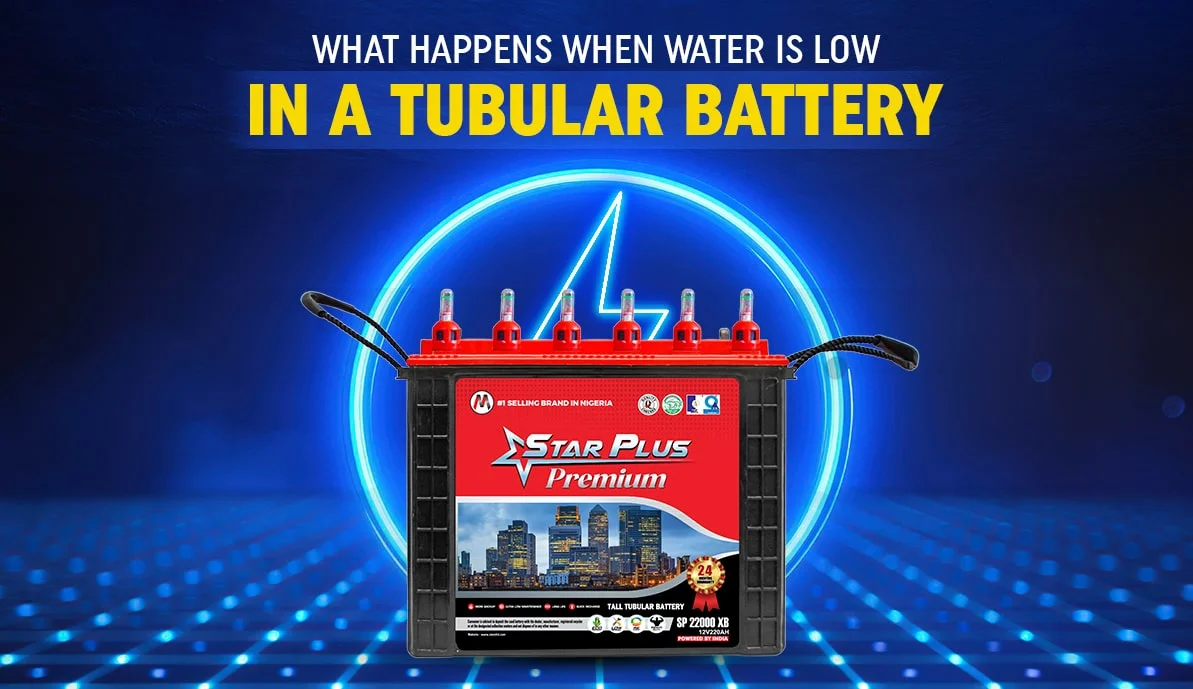
Tubular Batteries are long-lasting, versatile machines that can effortlessly power up your home. However, there is a significant maintenance requirement you need to keep in mind when using your tubular battery. That’s water. Water levels in a tubular battery must be maintained at all costs, but what happens when they drop?
In this article, we have discussed the necessity of water in tubular batteries, how to maintain them, and the alternative method.
Why does a Tubular Battery Need Water?
Inverter batteries rely on an electrolyte solution of water and sulfuric acid. A proper level of water is required to maintain the electrolyte solution and prevent acid from leaking and damaging the battery’s internal components.
When the battery charges and discharges, the water in the electrolyte solution can evaporate. This can lead to lower water levels. If the water level drops, the risk of battery sulphation increases, potentially compromising performance.
What type of water can be topped in a tubular battery?
Only Distilled Water can be used to top a tubular battery. No other type of water, including drinking water, can be used to top a tubular battery.
The primary reason is that distilled water is the purified form of water and contains no ions. In other water types, ions can react with the battery’s electrolyte plates, hindering the chemical reactions.
You can get distilled water from your nearby hardware store, battery, industrial products, retail, supermarket, and pharmacy units.
What happens when water levels are low?
When the water level in a tubular battery drops, the electrolyte levels become imbalanced. As a result, the battery plates get exposed to air, causing them to dry, heat up gradually, and then corrode. Here’s what happens when water levels are low:
- Permanent damage: Exposed battery plates can warp and oxidize, causing permanent, irreversible damage that shortens the battery’s lifespan.
- Reduced capacity: The tubular battery’s ability to perform chemical reactions diminishes, resulting in reduced power and shorter backup times.
- Overheating: The electrolyte’s ability to regulate internal temperature is reduced, leading to overheating and potential fire hazards.
- Slow charging: The battery may take much longer to charge or may not reach a full charge.
- Corrosion: Low electrolyte levels can increase the acid concentration, leading to corrosion around the terminals and poor electrical connections.
- Unusual odors: A burning or chemical smell can indicate overheating and an electrolyte imbalance.
- Swelling or bulging: In severe cases, the battery casing may swell or bulge due to excessive heat and internal damage.
Does a low water level reduce backup time?
Yes, a low water level in a tubular battery reduces its backup time. When the electrolytes fail to cover the plates fully, weaker chemical reactions occur. As a result, your battery’s capacity decreases, charging efficiency is reduced, and the total backup duration is shortened until the water levels are replenished.
How do I know if my battery needs distilled water?
Our tubular inverter batteries come with water-level indicators that indicate the electrolyte level in each battery cell. When purchasing our batteries or during installation, you will be given instructions on how to check your battery’s water levels. This would be easy for you to top up when your electrolyte levels get low.
How harmful is low electrolyte for battery plates?
Low electrolyte levels are very harmful to battery plates because they expose them to air, leading to permanent damage from sulfation, oxidation, and corrosion. This leads to reduced battery capacity and performance, increased internal resistance, and, eventually, plate degradation and potential short-circuiting.
Want to Buy Tubular Inverter Battery for Your Home and Office?
How to maintain a tubular battery?
Ensuring the health of your tubular battery is of utmost importance. Here’s what you can follow for better tubular battery maintenance:
- Keeping battery terminals clean and tightly connected to prevent corrosion.
- Avoid deep discharges, recharge promptly after power cuts.
- Avoid any overcharging or undercharging.
- Avoid any overheating
- Place your battery in a cool, dry place and avoid direct sunlight or exposure to the outside environment.
- Ensure that your storage place has good ventilation but is free from moisture.
- Regularly inspect for leaks, cracks, and unusual smells.
- Turn off the inverter when not in use to prevent pressure on the battery and reduce electricity bills.
Bottom Line
Knowing about proper water top-up is necessary to maintain the electrolyte levels in a tubular battery. Connect with us for further details about your solar inverter batteries. Let us know in the comments below about any battery problems, complaints, or needs for installation or replacement.
0 Comments