

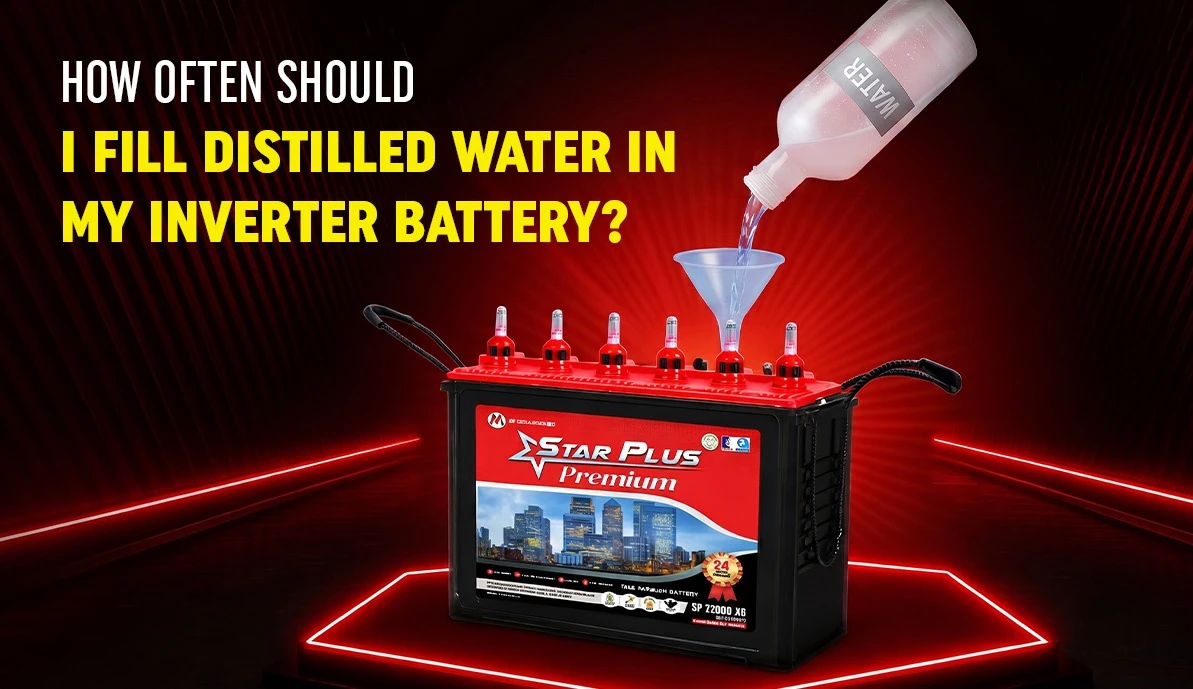
Inverter batteries are the backbone of reliable power backup in Nigerian homes. However, when it comes to proper care, several misconceptions dominate. One of the most overlooked aspects of an inverter battery is the quality of the water used for topping up. While some users fail to top up correctly, others receive water of poor quality.
What to do?
If you are a tubular inverter battery user, this blog can be your perfect guide. We have explained why distilled water for inverter battery is needed and how often you would need it.
Read on to know more.
Why do inverter batteries need a water top-up?
First, know why tubular inverter batteries require a water top-up.
Lead-acid tubular inverter batteries use a liquid electrolyte to generate and store energy through chemical reactions. Charging and discharging during use generate heat, which in turn causes water loss. This lost water needs an external top-up to maintain proper electrolyte balance.
If this water level drops too low, the internal battery plates are exposed to air, causing problems such as sulfation, overheating, reduced backup time, and permanent damage.
Why distilled water is particularly needed?
Distilled water is water purified by boiling and condensation, leaving behind impurities, salts, and minerals. This pure, neutral liquid with no dissolved solids and a pH of 7 is generally reaction-free.
Only Distilled Water is used to top up electrolytes in a lead-acid tubular inverter battery. Here’s why distilled water is the only form that is preferred:
- Mineral-free composition keeps the electrolyte solution stable, ensures smooth operation, and prevents unwanted electrochemical reactions.
- The purity of distilled water eliminates the risk of internal plate corrosion, ensuring proper functioning and a longer lifespan.
- With distilled water, tubular batteries retain their original storage capacity longer, providing consistent power backup during outages.
How often do I need to top up water for the inverter battery?
Lead-acid Tubular Batteries typically require a water top-up every 3 to 4 months. However, this largely depends on the temperature arising during battery usage. The frequency of water tops can be more, based on the following conditions:
- In hot climates, evaporation is faster, and water levels need to be checked every 15 to 20 days.
- If you are a first-time tubular battery user, check water levels monthly for the first 3 months, then make it a routine.
- If your inverter battery has recently been subjected to rigorous use beyond usual operating times, check its water levels for safety.
Where can I buy distilled water for an inverter battery near me?
Many users fail to top up batteries correctly because they lack awareness of where to source distilled water. We can assist you. Here’s where you can get near you:
- Your nearest Star Plus Battery Service Centre across Nigeria.
- General hardware stores that sell UPS and inverter battery accessories.
- Automotive spare parts store and generator servicing centres.
- Electrical markets and supermarkets stocked with inverter battery accessories.
- Online marketplaces in Nigeria.
Want to Buy Tubular Inverter Battery for Your Home and Office?
What happens if I use tap water instead of distilled water?
While it may be tempting to top up inverter batteries with readily available tap or regular water, doing so can harm your battery. Many users try to top up rainwater, tap water, and drinking water, which can cause multiple internal injuries.
Regular tap, drinking, and rainwater contain impurities such as dissolved solids, dust particles, and minerals like calcium, magnesium, chlorine, and iron that are highly reactive. Apart from harmful chemical reactions, prolonged usage of impure water can cause these complications:
- Reduced battery capacity means the battery will not fully charge or discharge.
- Frequent maintenance needs lead to more repairs and higher costs.
- The deposit restricts swift chemical reactions, causing the battery to overheat and fail permanently.
How to maintain your inverter battery?
Many battery users choose the right battery type, but fail with other maintenance aspects. Below are some expert-recommended practices:
- Regularly Check Water Levels: Since summer is here and Nigeria generally experiences hot weather, check water levels at least every 20 days. The water should cover the plates but should not exceed the maximum fill line.
Our Star Plus battery has an in-built Electrolyte Level Indicator that shows the electrolyte level in each cell, making maintenance easier.
- Top Up Correctly: Use a clean plastic funnel or syringe to add water to your battery. Avoid overfilling, as excess water can dilute the acid and overflow during charging.
- Clean Battery Terminals: Harmattan dust during summer is a major problem, and dust can accumulate on battery terminals. They increase corrosion, which reduces conductivity. Clean battery terminals with clean, dry, soft cloths, or apply anti-corrosion grease to prevent rust buildup.
- Avoid Deep Discharge: Do not overcharge or fully undercharge your battery, as deep discharges can shorten your battery’s lifespan by causing pitting and stressing the plates.
- Proper Ventilation: Keep the battery in a well-ventilated space to prevent heat buildup and evaporation. Do not let direct sunlight and moisture exposure.
- Professional Servicing: Our qualified and experienced technicians will assist you with any battery-related servicing, repairs, and maintenance.
Final Thoughts
Just like we need to drink pure water for a healthy life, your inverter battery also needs pure distilled water for proper functioning and a longer lifespan. At Star Plus Battery, we assist our clients with proper management and maintenance of tubular inverter batteries.
Connect with us for any battery order, purchase inquiries, installation, repair, replacement, or maintenance.
0 Comments