

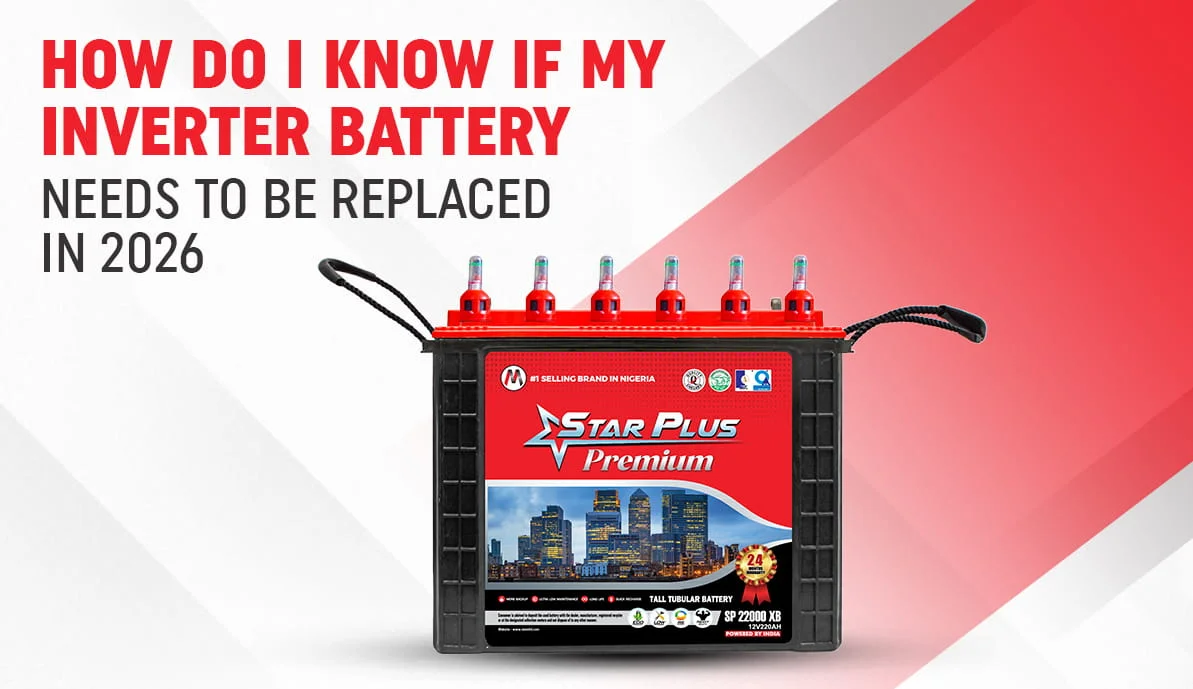
Inverter batteries have become a key component in a Nigerian household. Knowing when to replace an inverter battery can save you time and money. The answer isn’t simple, as an inverter battery’s lifespan depends on various factors that, if altered, can shorten it and require replacement.
As the New Year 2026 arrives, so do new demands for power consumption. To get a non-stop power supply, we have created this brief guide for you. Here are some signs that indicate whether your inverter battery needs to be replaced.
What is the lifespan of an inverter battery?
Battery life is the duration during which a battery can reliably supply power. The lifespan of an inverter battery is generally measured in two primary ways.
Calendar life signifies the number of years a battery can last. Cycle life refers to the number of complete charge-and-discharge cycles a battery can undergo before its capacity decreases.
Our tubular inverter battery has a lifespan of 4 to 5 years. Although the base lifespan is 5 years, with proper, gradual maintenance, you can extend it.
You can check our blog on how long a 220ah tubular battery lasts for an uninterrupted power supply. For better understanding, first learn the signs of a battery replacement.
5 Signs Your Inverter Battery Needs Replacement
An inverter battery’s capacity naturally diminishes over time and repeated use. If you are wondering how to know if an inverter battery is bad, check out these five major signs:
1. Longer Charging Time
If your inverter battery is working correctly, it will charge in a certain amount of time. When the charging time becomes longer than usual, it indicates that the battery cells are unable to provide a steady energy supply. This can be the first sign that you need a new inverter battery.
2. Battery Leakage
Secondly, your inverter battery replacement can depend on the leakage it is causing. Your inverter battery is leaking, and the gushing electrodes need to be addressed immediately. Leaking batteries increase the risk of fire outbreak and need to be replaced soon.
3. Alarms and Error Codes
Modern inverters have built-in battery management systems that can monitor the battery’s health. If the inverter displays error codes or sets off warning alarms, they are clear indication that your battery is either in danger or causing an issue. Indications such as low-voltage alarms and battery faults need to be addressed as soon as possible.
4. Bulging Battery
In tubular inverter batteries, a bulging case or corrosion at the terminals can indicate a chemical imbalance. If left unchecked, these conditions can gradually degrade your battery’s performance and eventually damage it.
5. Reduced Effectiveness
In some cases, your inverter battery might flicker. This indicates that your battery is defective or not working at its optimal. This is when you will need a new battery for better, more consistent performance. You can also measure the reduced effectiveness through interruptions in the power backup and frequent shutdowns.
Several factors lead to the frequent replacement of inverter batteries. Common usage mistakes and maintenance issues can cause rapid discharge and long-term damage. To understand these reasons in detail, read our blog to know why an inverter battery discharges fast.
Want to Buy Tubular Inverter Battery for Your Home and Office?
How Can I Maintain My Inverter Battery?
Frequent battery replacements in 2026 can be avoided with a few simple maintenance tips. Here’s how you can maintain your inverter battery and gradually enhance its lifespan:
1. Store Properly
Store your inverter battery in a well-ventilated place to prevent overheating during charging. Keep away from direct sunlight and moisture to reduce heat and dust buildup. Maintain a 6-inch gap around your battery for better airflow.
2. Distilled Water Usage
Your tubular inverter battery requires a water top-up when the electrolyte level falls. Our tubular inverter batteries feature built-in electrolyte level indicators that alert users when the electrolyte level drops.
When it falls, you need to source only Distilled Water to top up the water levels. Read our blog on the proper use of distilled water for the maintenance of your inverter battery.
3. Clean Frequently
Prevent frequent inverter battery replacement with proper cleaning. Regularly clean the battery terminals to remove dust and prevent corrosion caused by rust deposits. Try to use a soft brush or a soft, dry cloth for cleaning.
4. Systematic Usage Habits
Avoid deep battery discharge by connecting only essential devices to your battery. Do not undercharge or overcharge your battery, as this will damage its plates. Charge your inverter battery periodically to avoid sulfation.
5. Safety Checks
Ensure the vents of your battery are open to prevent hydrogen gas from escaping. Avoid short circuits by checking for damaged wires. Keep your inverter and battery away from pets, children and inflammable objects.
Bottom Line
Delaying inverter battery replacement can weaken your power backup over time. At Star Plus Battery, we offer long-lasting batteries designed to reliably power homes, schools, offices, and commercial centres.
Review the maintenance tips mentioned above and stay alert for warning signs to prevent major battery damage. For more information on batteries, pricing, orders, dealers, and distributorship opportunities, connect with us today.
0 Comments