

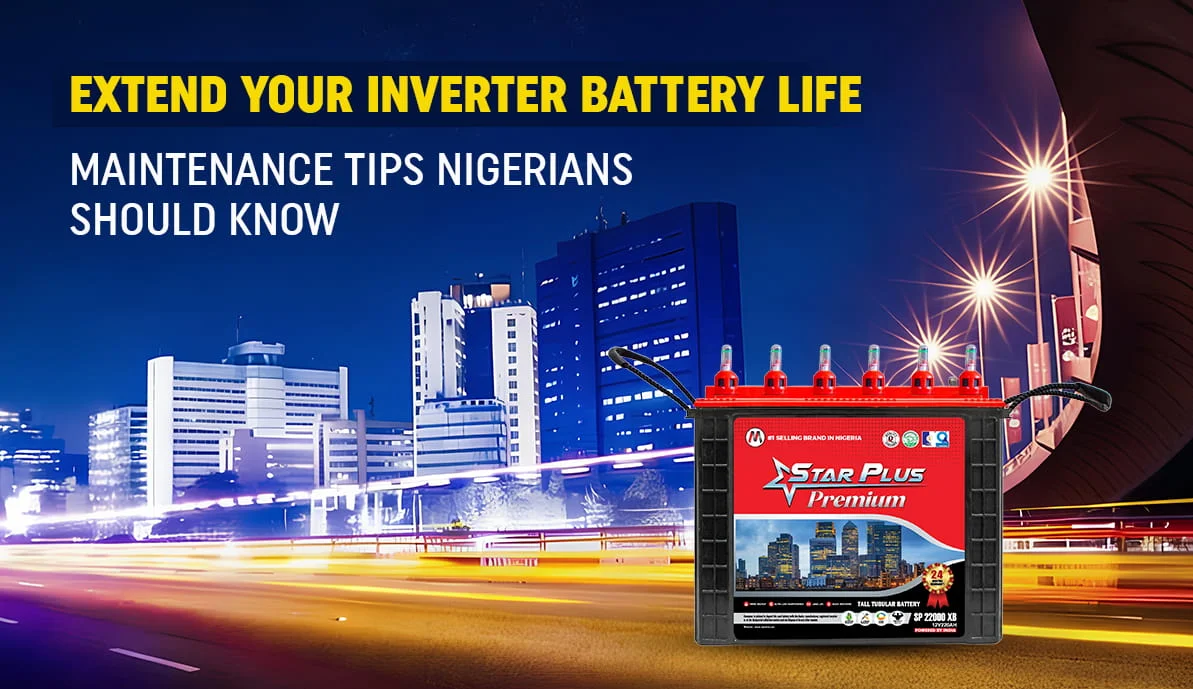
In a country like Nigeria, where power outages are part of daily life, inverters have certainly become a critical backup power solution for businesses and homes. The performance of an inverter system depends mainly on the health of its battery. Without utmost care, inverter battery maintenance, especially tubular battery maintenance, depends primarily on the battery’s health.
According to the experts at Star Plus Battery, the performance of an inverter battery maintenance system depends entirely on the battery’s health. Without proper care, inverter batteries, especially the tubular batteries, will always fail early, leading to huge expenses. This blog explains how to make an inverter battery last longer, how to maintain its health, and which battery is best for an inverter in Nigeria.
Understanding Inverter Batteries in Nigeria
The common inverter battery maintenance used in Nigeria is tubular batteries and lithium batteries. Among these, tubular battery maintenance from Star Plus Battery is widely preferred as they are durable, tolerate deep discharge, and are perfect for Nigeria’s frequent power fluctuations and long outage hours.
Despite its durability, even the best tubular battery maintenance will deteriorate fast if poorly maintained. Heat, overcharging, deep discharging, and lack of routine maintenance are the critical threats to battery lifespan in Nigeria’s climate.
How to Make an Inverter Battery Last Longer
1. Avoid Deep Discharge
The fastest way to damage an inverter battery is to enable it to discharge completely. Always try not to let the battery level drop below 30-40%. Deep discharges strain the internal plates and shorten the battery’s lifespan.
2. Use the Right Load
Connecting heavy appliances such as electric kettles, pressing irons, and pumps to a small inverter system will definitely overload the battery. Ensure that your inverter capacity matches the power needs.
3. Charge the Battery Regularly
In Nigeria, with frequent power outages, batteries might remain discharged for too long. Always try to recharge the tall tubular inverter batteries as soon as the power is restored, or supplement charging with solar panels or a generator.
4. Install in a Well-Ventilated Area
At times, Nigerian temperatures can be extreme. Heat accelerates battery wear and tear, so try to keep your inverter and battery in a cool, dry, well-ventilated space, away from direct sunlight and in a room that isn’t sealed.
How to maintain inverter battery health?
According to Star Plus Battery experts, tall tubular batteries are popular in Nigeria because they require less maintenance than flat-plate batteries, but they do require close attention. Tall tubular batteries are very popular in Nigeria because they require less maintenance than flat plate batteries, but they still need attention.
-
Check Electrolyte Levels
For flooded tubular batteries, do inspect the electrolyte level every 1 to 3 months. If the level is low, top it up with distilled water, not acid or tap water.
-
Clean Battery Terminals
Corrosion on the terminals reduces charging efficiency. Clean the terminals periodically with a dry cloth or brush, and apply petroleum jelly only to prevent rust.
-
Avoid Overcharging
At times, overcharging causes excessive water loss and overheating. Ensure your inverter and charge controller are well configured for your battery type.
-
Equalization Charging
Some inverters do support equalisation charging, which balances the battery cells. Use this feature occasionally if recommended by the battery manufacturer.
How to Maintain Inverter Battery Health
- Maintaining inverter battery health is all about consistency and proper usage. Definitely use a high-quality inverter and charger with overcharge protection and deep-discharge protection.
- Definitely switch off the inverter when not in use during prolonged periods away from home.
- Never mix old and new batteries in the same inverter bank, as it reduces the entire efficiency of the inverter bank.
Monitor battery performance
If backup time drops significantly, it is always a sign of ageing and poor maintenance. Regular inspection and early intervention do add years to your battery’s usable life.
Which Battery Is Best for an Inverter in Nigeria?
The best battery for an inverter in Nigeria depends mainly on budget, usage, and power availability.
1. Tubular Batteries
It is the best overall choice for most Nigerian homes. They certainly last for at least 3 to 4 years with proper maintenance. All you are required to do is deep discharge well, and they are cost-effective even in the long run.
2. Lithium Batteries
Excellent performance, fast charging, prolonged lifespan, but very expensive. It is ideal for solar-heavy setups and users who want minimal maintenance.
Given the frequent power cuts Nigerians face, tubular batteries remain the practical and reliable option.
Want to Buy Tubular Inverter Battery for Your Home and Office?
Final Thought
Inverter batteries are a silent investment, and proper maintenance is critical to getting the most value from them. Therefore, by avoiding deep discharge, maintaining proper electrolyte levels, ensuring good ventilation, and using the appropriate battery type, like the tubular batteries, you can definitely extend the life of your inverter battery. With power challenges from Nigeria, a healthy inverter battery isn’t just a convenience but a necessity. A little care today can save you the cost of replacement tomorrow.
0 Comments