

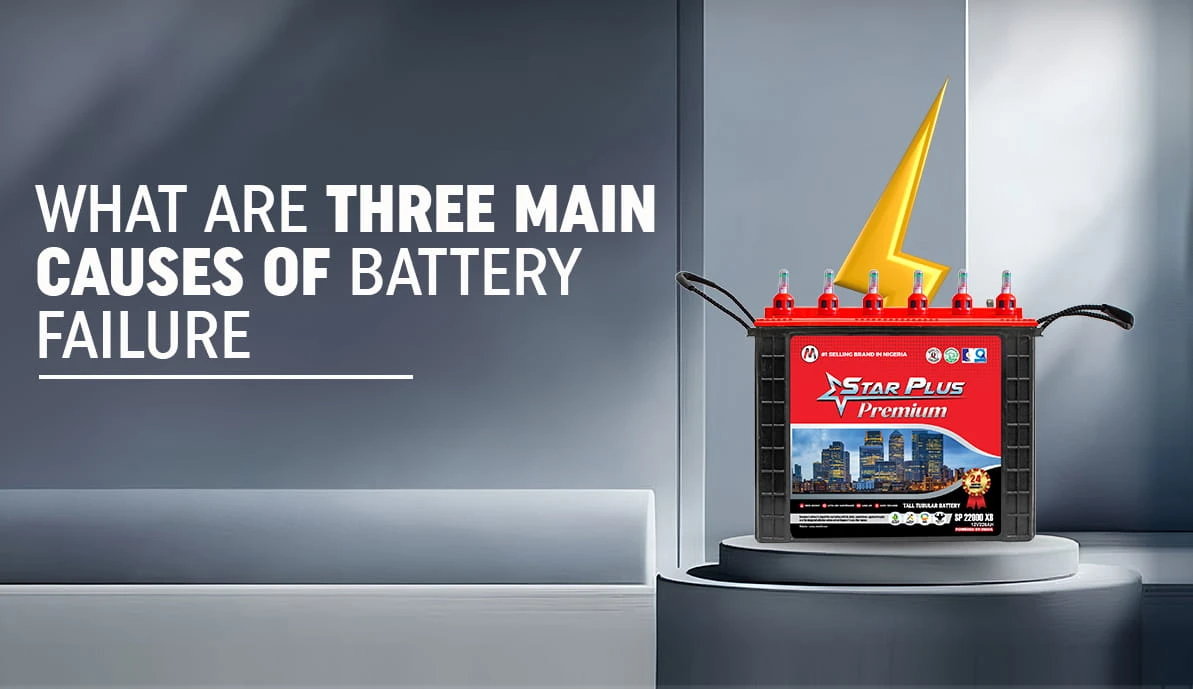
Inverters are an essential component in a Nigerian household. Every high-functioning inverter is powered by a high-powered battery. However, like any other electronic device, inverter batteries also face problems that hinder their performance.
This blog decodes three major inverter battery problems and their common solutions.
What are the common signs of battery failure?
Your inverter battery is likely to show various signs of problems before it breaks down. Here are some of the common signs indicating battery failure:
1. Battery Warning Light
If you are wondering what is one of the first indications of a failing battery? Then check for your battery warning light. When the light on your battery starts blinking, it indicates that your battery is in danger or that there are problems you need to check. Mainly, it warns of problems with the charging system and, often, the battery itself.
2. Reduced Backup Time
When your battery loses charge much faster than it did previously, this is known as reduced backup time. Once fast charging stops during power cuts, your battery needs to be checked.
3. Slow Charging
Every inverter battery has a specific charging time. If your battery takes significantly longer to fully charge, or doesn’t reach full charge, it clearly indicates a problem.
4. Swollen Battery Case
In some cases, your inverter battery might look swollen, distorted, or bloated. These are signs of internal pressure, indicating either improper chemical reactions or system issues that are causing an inverter battery problem.
5. Rotten Smell
If you get a rotten-egg (sulfurous) smell or any burning odour from your battery, it indicates acid leakage or internal damage.
6. Strange Noises
Sometimes, your battery might make hissing, crackling or buzzing noises. Don’t get afraid. It’s a common sign of internal battery damage and requires repair or replacement.
What are the three main causes of battery failure?
As you learn about some of the common battery failure signs, let’s focus on the major causes of battery failure to avoid them in future. Here are the three main causes of battery failure:
1. Extreme Temperature Exposure
Direct or prolonged exposure to extreme temperatures can cause severe damage to your inverter battery.
High temperatures can accelerate corrosion, gassing, and material breakdown, thereby shortening battery life. The cold weather reduces battery output, making it harder for the battery to deliver the necessary power.
2. Charging Issues
If you are wondering why my inverter battery is lasting one 1 hour? It might be a charging issue.
Overcharging and undercharging can both cause plate damage, sulfate buildup and reduce the battery’s capacity. In other cases, a faulty charging system can lead to battery failure. Not allowing enough time for the battery to fully charge can also hamper internal systems.
3. Physical or Internal Degradation
Rust buildup on the terminals can lead to corrosion and internal damage. Normal chemical ageing and irreversible sulfate crystal buildup on plates reduce the battery’s ability to hold a charge.
Shedding of battery plate material can lead to rapid battery failure. Overheating and overcharging can cause this battery problem.
How can I solve my battery problem?
Every inverter battery problem has an available solution. Here’s how you can solve the common battery problems:
1. Check Connections
Ensure that your battery terminals are tight and free from corrosion. Clean with a soft, dry cloth or a brush with a baking soda/water mix if needed.
2. Check Water Level
Check the water level in your tubular batteries with our built-in Electrolyte Level Indicators. A balanced water level prevents sulfation in the batteries. You need to top up only distilled water, not any other type.
3. Maintain Proper Ventilation
Store your inverter battery in a well-ventilated area with good airflow. However, keep your battery away from direct exposure to sunlight and rain. Moisture and cold weather.
4. Reduce Load
Decrease of excessive load can solve half of the inverter battery problems. Do not burden your inverter battery with unnecessary appliances, as it may drain power. Use only necessary appliances during a power outage.
5. Properly Charge Batteries
Do not overcharge or undercharge your batteries. Maintain a proper charging duration to prevent overheating of the battery plates.
Want to Buy Tubular Inverter Battery for Your Home and Office?
Bottom Line
Rectifying common inverter battery problems and solutions will help you with an uninterrupted power supply. We at Star Plus Battery can offer you the best high-capacity, high-power inverter batteries. Follow the tips above to overcome some common inverter battery problems and achieve a consistent lifestyle ahead.
Connect with us for queries and information regarding battery order, maintenance, repair and replacements.
0 Comments